Author: Oliver Raymond – Mansfield Steiner Secondary School French Teacher
For thousands of years before colonisation, the continent we call Australia resounded with the sounds of 250 different language groups, including 800 dialects and variants (AIATSIS, 2024). Building on this rich foundation of linguistic diversity, waves of migration have woven new languages into the aural tapestry of our country, adding the song-like texture of Italian and the European Romance languages, the tonal complexities of Mandarin or Vietnamese, and many others since, to our national language of English. Less than three quarters of our population speak exclusively English in the home, with roughly three hundred languages being spoken nationally, including many Indigenous languages. Internationally, and in countless families across our country, bilingualism and plurilingualism is the norm.
Despite the reality of our nation’s multilingualism, it would be easy to forgive foreign visitors for assuming English was the only game in town. This is especially the case in regional areas which lack a significant population of immigrant families. In our geographically isolated context, many Australians often feel as though there is limited application, and little to be gained, from the study of an additional language. We can be overconfident in the global pre-eminence of English, and in maintaining this monolingual mindset, we risk further isolating ourselves, shutting ourselves off from the richness and diversity of our world and its cultures. Engaging with the process of learning an additional language holds a broad range of benefits, many of which will persist, even if that study is not maintained beyond the period of our students’ secondary education. Language learning gives students invaluable experiences of communication across linguistic and cultural barriers, supporting them to become problem solvers, risk takers, and empathic beings, secure in their self-esteem and always willing to take on other perspectives.
Neuroplasticity, the incredible property of our brains to functionally reconfigure themselves in response to external stimuli and cognitive demands, has been found to be augmented and increased through the experience of second language acquisition. A rapid increase in grey matter density occurs even in short-term exposure to language learning, particularly in younger people (Li et al, 2014). From a Waldorf perspective, the experience of learning a language enables students to become alive to the strangeness of another tongue, exposing them to different meanings to stimulate deeper thinking. This process supports students’ development of a ‘world-understanding’, becoming open to the minds and experiences of others, shifting to an outlook that encompasses care and awareness of one’s fellow human beings.
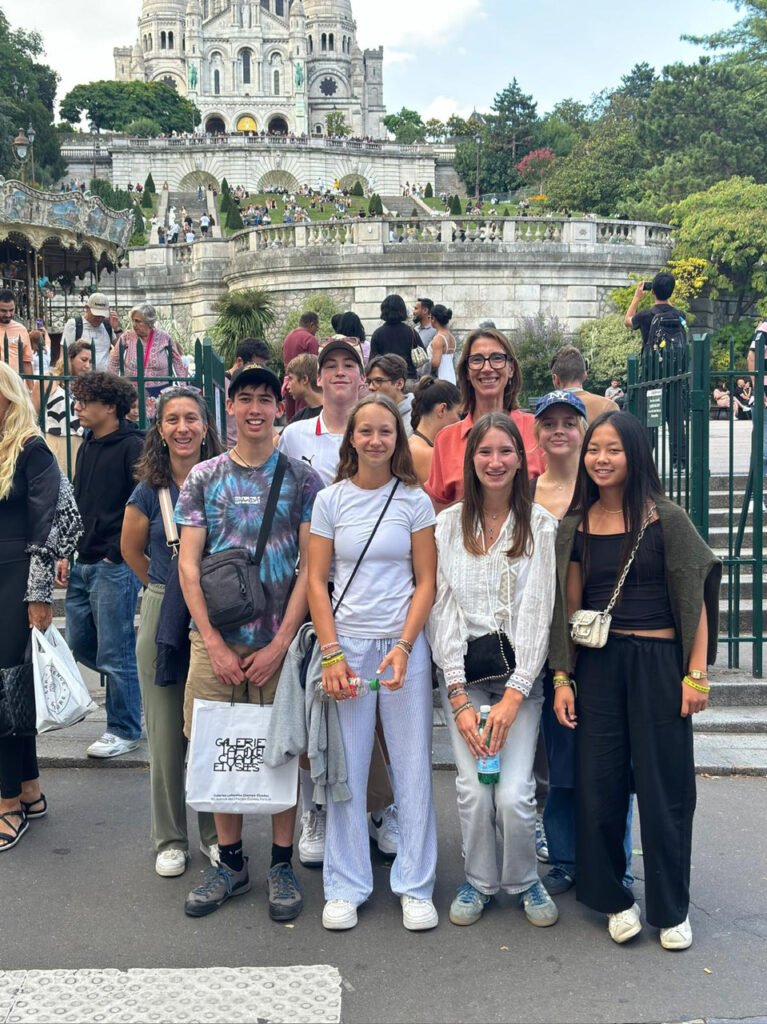
The current offerings of Spanish in the Primary School and French in the Secondary School align with our school’s emphasis on expression through music and the feeling life, as these languages were understood by Steiner to enable communication through musical and emotional dimensions. French, besides its status as the international language of diplomacy, holds fantastic possibilities for students in our immediate context. Our students will build up the capacity to engage with French speakers in our community involved in farm work, the hospitality industry and on the ski slopes of Mount Buller. They will launch into their French language exchange in Year 10, building friendships which can become lifelong connections, opening up their future horizons to the possibility of international work, study and travel. In Years 11 and 12, the International Baccalaureate provides rich opportunities for students to draw on the resources they have developed through their language study – not only in French but also across the full breadth of IB subjects, all of which benefit from students who are able to navigate multiple meanings and make connections between diverse areas of knowledge. Our students possess great capacity for bringing positive change into the world, and if we can embrace a multilingual mindset, we will be providing our students with a powerful means to think through and enact the change they seek.