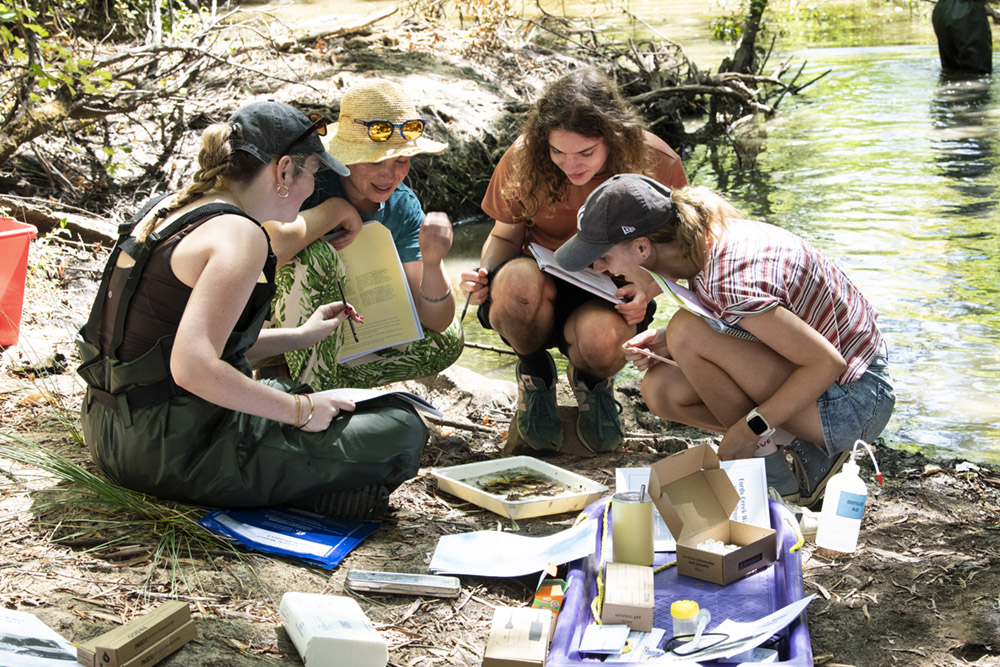
Year 12 students from The Mansfield Steiner School were recently spotted along the banks of Fords Creek undertaking an analyse of the waterway. This field project was made possible through a Junior Landcare Grant, which provided $5,000 in funding to purchase chemical and biological analysis equipment.
The students were joined by Kim Magnay from Up2Us Landcare and Sue Kosch from the Catchment Water Authority, as well as science teachers, Dion Hall and Briony Davenport. Together, they explored the complexities of water management, identified the invertebrates, and analysed the biochemistry of the waterway, deepening their understanding of the local ecosystem and the challenges of finding solutions.
The study revealed that the section of Fords Creek flowing through Mansfield Botanic Gardens ranked poorly in overall health, reflecting high levels of degradation, erosion, and invasive weeds—particularly after a dry and hot summer. However, students were surprised to discover a significant number of highly sensitive aquatic insects, such as caddisfly larvae and dragonfly nymphs, which are typically found in healthier waterways. This suggests that despite the creek’s challenges, it remains a refuge for various organisms during the summer months, highlighting the importance of ongoing conservation efforts.
To help restore the creek, students have developed an action plan that includes rubbish collection, weeding, and mulching of previous tree-planting sites, with plans to carry out these activities annually during the cooler months. To raise awareness and inspire younger students to get involved, the students presented their findings to the school community in a creative and engaging way—through a rap song.
“Thank goodness it is not another unread science report,” said teacher Briony Davenport, highlighting the students’ creative approach to sharing their research.
As part of their International Baccalaureate Diploma Program (IBDP) studies, students must complete a collaborative science project each year, focusing on a global issue at a local level. This waterway analysis will now become an annual initiative, contributing valuable data on the health of the creek over time. The collected data will be made available to the community via the school website.